The tagline of this courses blog has been on my mind since the beginning of the semester. What work do memoirs do? I’ve pondered this with each reading in and outside of class, trying to understand what the parameters for a memoir are. Does it have to be the story of a somebody? Does there need to be a major lesson in the end? Does it have to be completely factual? Each memoir invites its own structure and style, telling a different story in a different way, so what makes a memoir and what work does one do?

The word memoir is derived from the French word mémoire, which simply translates to mean “memory.” From our studies in this class, we have come to the agreement that memoirs, just as memories, are a fluid medium. There are no rules that can be applied to how someone can and should tell their own story, the only thing that makes a memoir right is that it is the recounting of a memory.
Image via Andrea Piacquadio on Pexels
So then, what work do memoirs do? Does it appeal to society’s intrusive tendency to know what is happening in another person’s life? Does it give the audience something to relate to? Is it just meant to be a form for the author to record their experience for personal reflection? In a way, I believe it to be a mix of all of these factors and more. Memoirs work to provoke thought in both the author and the audience, and what either of them gains from the experience is the work of the memoir.
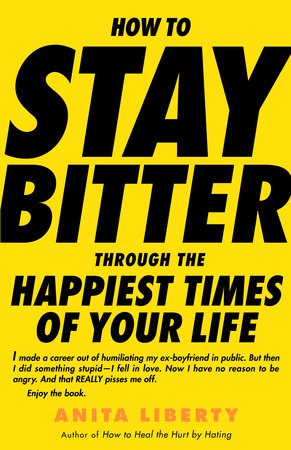
Last summer, I read the book “How to Stay Bitter Through the Happiest Times of Your Life” by Anita Liberty, which I would not have immediately categorized as a memoir upon first reading it. In her book, Liberty wittily “documents the perils and pitfalls” of her creative career and relationships through blog entries, written screenplays, poems, to-do lists, and finally essays. It was such a fun and inventive way for her to share her experience, that in my mind, prior to this class, I had never even dreamed of calling it a memoir because it was not the structured type of writing that I would expect of such a genre. Instead, my mind just allowed it to fall into a miscellaneous pile, labeling it a fun read and nothing else. However, now I know, this along with so many other unexpected forms of memory sharing are all memoirs, maybe just in a less conventional medium.
Image via Penguin Random House
With the newfound understanding of memoirs, I have begun to see many things, beyond books, as memoirs. Most shockingly, throughout this pandemic, I have found myself spending more time on social media than I have ever before because this is one of the ways that I am able to stay connected with those who I am practicing social distancing. My nightly routine now consists of an hour – that should be spent sleeping – scrolling through Facebook, Twitter, Instagram, Snapchat, and Tik Tok to see what my friends have been up to that day. In each post, I see people sharing memories (photos and videos) from exactly one year earlier. They collect these images, and caption them with the story of that day, remembering a time before quarantine. Others will upload videos of them talking, where they quite literally say “story time,” as they begin to tell their audience something that has happened to them in the past. It has become a trend on Tik Tok to make videos that begin with “put a finger down if,” where the audio quickly tells an embarrassing story from the person’s past, and at the end the person in the video puts a finger down. On example of this is from user, @thec00chiepolice (I’m sorry about the username, but the content is appropriate). The list goes on for each platform, and what stood out to me most is the mention of Liberty’s use of blogs – the medium that I am writing for right now.
Image via Cecilia Gray
In today’s digital culture, we are constantly sharing experiences, stories, and most importantly memories online for our closes friends and are most estranged acquaintances to see. We snap photos, record videos, and write blogs for ourselves, first and foremost. We want to be able to remember the events that happen to us, but we also want to share them with the world, or at least those who are interested. On the other side, we become the ones who are interested, scrolling through social medias and reading other people’s thoughts because we live in a world that is consumed by memory. There is no right or wrong way to remember, and as we share these tidbits of our lives with the public, we are all in some way become memoirists, even if we are not the most prolific.

 Inky Impressions