In July 2020, a report was released in which it documented that 2,306 Native American women and girls went missing in the U.S. within the past 40 years. Even further, roughly 1,800 of those who went missing were killed or completely vanished. The missing and murdered Indigenous women (MMIW) is a transnational (severely affecting the United States and Canada), in which one of the most underserved and marginalized communities, that of the Native American woman, is disproportionally at risk within their own nation. Various organizations have lead marches, trainings, and memorials for these lost individuals over the years, yet this national crisis still goes unnoticed most days.
For my commemoration project, I propose the development of an online space and a mobile memorial that will educate audiences about the ongoing MMIW crisis and provide a space to celebrate the lives of those lost. However, it is not my goal or belief to only highlight the troubles that Native American communities face. The Native American culture revolves around community, and I would like for my project to also develop an environment that celebrates the beauty of the culture through art and education. For someone unaware of the MMIW crisis, it is my goal to give a name and a personality to each and every missing woman, not just a number. In order to do that, I hope to provide a space for people to reflect on the community in which the women were taken from.
Both the physical and technical commemoration spaces will be divided into five sections: A living memorial of those missing, an education center on the crisis itself, a cultural museum that intertwines historical and community contributions, a reflection space for people to share memories and kind messages, and a “call to action” space that educates audience members of the ways they can fight against the MMIW crisis. As this is an ongoing crisis, I am aware of two things. Firstly, this project must be a safe space for the relatives and friends of currently missing women to celebrate the lives of those they lost and remain hopeful. Secondly, this project, as much as I hope it will change in nature and no longer be as necessary in future years, is a moving piece of history, in which viewers need to be aware that the time has not passed. We are witnesses to the marginalization and mistreatment of indigenous people each day, and we cannot continue to be silent about it.
In his article “Nostalgia: The Abdication of Memory,” Christopher Lasch writes, “Strictly speaking, nostalgia does not entail the exercise of memory at all, since the past it idealizes stands outside of time, frozen in unchanging perfection,” (83). In other words, there is a difference between saying “I remember that” versus “I wish I could go back.” Memory and nostalgia are often confused, and even I sometimes allow my brain to fuddle the two together. When looking at my Snapchat memories for instance, I always go to them with the intention of looking back at good times, embarrassing moments, and reminders of who I was exactly one, two, or five years ago. I never intend to reflect on the memory and wish that life were like that once again. But, when I see memories of trips to Disney, goofy videos with friends who I have since lost touch with, or photos with my late father, I can’t help but turn those memories into longings. While the lines that distinguish nostalgia and memory can cross at times, they are never one and the same. Strictly speaking once more, nostalgia does not require memory, because aside from being nostalgic for our own pasts, society often get nostalgic for a time that it has never experiences. Entire communities and generations celebrate the past, saying they miss decades that they never experienced. It is a strange concept to comprehend, especially when these words are often used in tandem and interchangeably, but by all means, they are not the same.
Work Cited
Lasch, Christopher. “Nostalgia: The Abdication of Memory.” 1991.
In every history, there are several sides to the story, yet those who capture the memories are flawed to forget the other sides. In the HWE #1 workshop, my group discussed how, in the context of individuals being their own personal historians, we decide what matters and what we want to remember. No one ever saves the things that feel like everyday products of life, nor do we journal and photograph the things that we would rather forget. Instead, we save the artifacts that will remind us of what we believe to be good and monumental, coloring the rose glasses that we will later dawn when we wish to remember. In the same sense, people who romanticize the past look on it through the memories they positively curated themselves, paying no mind to the imperfections of the time.
When I had a publishing internship last semester, we talked about the pros and cons of fashioning new, contemporary releases to reflect the current pandemic, yet the consensus was that while the books should highlight the positive advancements in society, no one wants to read a book designed for escapism that reflects the troubles they wish to escape from. In all forms of media, we often portray the good we wish to see in the world because we are in full control over the narrative. Therefore, both in the classics films and TV shows from decades prior to current ones that romanticize the past, they are never truthful portrayals of what society ever was or will be, as proven through movies such as Pleasantville.
In remembering and romanticizing the 1950s, as David did in Pleasantville, it is easy to get caught up in the cookie cutter image that circulates media. He invests in the Pleasantville television show because he is drawn to the idea of a stable family and a united community. However, once he is pulled into the narrative to live it himself, he notices the dysfunctionalities that were true of the era that had been written out for the sake of portraying it with rose colored glasses. Stephanie Coontz argues this same point in her article “What We Really Miss about the Fifties,” by stating how the medias portrayal of the traditional, homogeneous family unit and the harmonious, nonthreatening communities is false in many ways.
My mother always tells me that history repeats itself in one way or another, which is why it is imperative to be aware of the past and observant of the future. In watching Pleasantville and reading Coontz’s article, I began to think about how truly complicated it is to know and understand history from all perspectives, preferably unbiased ones at that. This is not a new thought, but I think this class has shown a brighter light onto how nostalgia, in particular, can threaten our understanding of history, starting with the simplest things such as the multi-family households that Coontz discussed were common in the 50s, yet rarely portrayed in modern media. Especially to those whose main source of knowledge is pop culture, the ways in which nostalgia can reconstruct biased memories of history introduce the risk of an individual only seeing one, heavily biased perspective.
We all do it, but at what point does it become dangerous?
In my HWE #1, I explored how the food and beverage industry have used nostalgia marketing in recent decades to restore the past and capitalize on consumer’s nostalgia. Today, as I was scrolling through TikTok, I came across this video that perfectly complements my interest in nostalgia marketing, and I just want to share it.
<p value="<amp-fit-text layout="fixed-height" min-font-size="6" max-font-size="72" height="80">Nostalgia is a complex emotion that cannot be contained to one simple definition. Rather, nostalgia spans across a multitude of definitions of which it is characterized by how it can be incited and how it can effect an individual and/or an entire community. Svetlana Boym’s The Future of Nostalgia, highlights two distinct branches of nostalgia: restorative nostalgia and reflective nostalgia.Nostalgia is a complex emotion that cannot be contained to one simple definition. Rather, nostalgia spans across a multitude of definitions of which it is characterized by how it can be incited and how it can effect an individual and/or an entire community. Svetlana Boym’s The Future of Nostalgia, highlights two distinct branches of nostalgia: restorative nostalgia and reflective nostalgia.
Boym defines restorative nostalgia as an emphasis on the want to “rebuild the lost home and patch up memory gaps” (41). Restorative nostalgia is the homesickness aspect of nostalgia that encourages individuals to hold on to and preserve the past for as long as possible, as to not conjure an individual’s/community’s anxiety about the incongruities between the past and present (44). In other words, restorative nostalgia is the emotion that drives individuals to contact old friends to reunite, to go in search for a landmark from their pasts, or even to conspire ideas that explain lost history and challenge what is unfamiliar.
Boym defines reflective nostalgia, on the other hand, as a dwelling “in longing and loss, the imperfect process of remembrance” (41). More commonly known, reflective nostalgia acknowledges that the past exists to make way for the future, yet, those who experience this nostalgia still look back at the past with a certain fondness. Unlike restorative nostalgia, however, reflective nostalgia does not attempt to repair and recreate what has already been done, instead it simply relishes in the memories, through photos, music, and such, that are both individual and collective in nature.
In my first blog post, I wrote about the role nostalgia plays in society, and in doing so, I used Disney+ as a community artifact. Now, with my new understanding of the distinctions of nostalgia , I want to revisit them.
Of the two categories, it is my understanding that the “Throwbacks” and “Nostalgic Classics” are signs of reflective nostalgia. To rewatch a film from your past is to bask in the memories for just a few minutes, and as you do so, you have the opportunity to anecdotally share your love and past experiences with anyone who joins you non watching.
The “Reimagined Classics,” on the other had, are very much an example of the preservation of the past, which subjectively improves upon flaws, updates the narrative to fit modern standards, and presents itself as something new in order to reach generations who had never before seen the original. This section rebuilds the past in the same way conspiracy theories do, and it begs the question of which method is better.
With the perspective of Boym and myself from a week prior, I find that a main distinction between the two nostalgias are the way they are perceived in society. Unknowingly, individuals judge everything, especially emotions, and label them as wither good and bad, even when they feel them each the same. Reflective nostalgia is what I find is typically the more common and accepted version of nostalgia. It is seen as a “healthy copping mechanism” to appreciate the past and hold on to the memories and experiences that likely allowed an individual to grow as a person, without interfering much with their present lifestyle.
Conversely, many cases of restorative nostalgia are seen as “harping on the past” and resisting change. While the negativity displayed towards restorative nostalgia is not always actually negative, as shown through examples such as Disney’s “Reimagined Classics,” restorative nostalgia garners a reputation of an emotion that cannot grow beyond the point of what the individual deems as the “golden years.” Even I feel victim to harshly judging the remakes of classic films, despite indulging in them myself.
These chapters were insanely interesting, as they gave a definition to emotions that I had previously seen, experienced, and accepted without question. In reading about restorative nostalgia in particular, I became curious about the below questions, and would love to discuss them during our class on Tuesday.
As I discussed the different reactions that I have had to restorative and reflective nostalgia, I want to know how others interpret these two emotions and why you think they are or are not so different.
As Boym asks on page 47, when talking about the restoration of the Sistine Chapel, “What is more authentic: original image of Michelangelo not preserved through time, or a historical image that aged through the centuries?”
To broaden the topic, is it ethical to preserve any form of art or history that has ended, when the intentions of the owner is are unknown?
How do you think the past decade’s recent interest in conspiracy theories has effected society, and what do you think it says about us?
Works Cited
Boym, Svetlana. The Future of Nostalgia. Basic Books, 2001.
On October 24, 2020, after weeks of staying home and being unable to escape the pressures of work and and school, my mother and I both decided to take the entire Saturday off. We relished in having a day to sleep in and take a break from the nonstop emails and Zoom meetings. Longing for a simpler time, I told her that we were going to “go out for dinner” — meaning that I was going to place a curbside order for a local restaurant where our family had celebrated numerous occasions, and we would pretend as though it were like the better days we had seen.
Just as the sun was setting, we hoped in my small white Sudan, with me behind the wheel. Windows down and music humming in the background of our conversation, I had no control over the nostalgia that instantly hit me. As I drove past the church I grew up in and grew apart from, I was struck with memories of Tuesday night Bible Studies that were somehow more of a staple in my family than Sunday morning sermons themselves. I longed for the times when my sister would style my hair with colorful hairballs that would clink with every step. When my dad would make us have family dinners with hot chili that I would always pick the kidney beans out of and then cover in cheese. When I and all of my siblings would pile into the backseats of my mom’s fire engine red SUV and sing along to the radio. I longed for a time when there was no pandemic, when times were simpler, and I was comfortable.
According to Andreea Deciu Ritivoi in “Longing to be Home,” nostalgia was classified as a mental disorder in 1755. Now, just a few centuries later, nostalgia has become less of a taboo and more of a proof of humanity. As humans, we value and find comfort in the ability to meet a person and reminisce with them about a cultural phenomenon from years prior or even a universal feeling like the seasons changing. We have come to live in a society that capitalizes on the human longing for easier or more familiar times. Nostalgia is no longer an illness that afflicts a few people, it is now a core foundation of modern life.
Corporations and marketers curate an environment in which it is nearly impossible to escape nostalgia because on some level it is a way for much of human kind to connect on familiar ground. For instance, the moment that you log into a streaming service or social media, you are greeted with categories that will give you flashbacks to a time that the algorithm believes you to be in search of. Disney+ quite literally promotes categories that are created specifically to evoke a sense of nostalgia in viewers.
Starting with the “Throwbacks,” they assume a certain type of connection that subscribers have to the Disney brand and immediately greet them with suggestions on how they can relive their glory days. This is immediately followed by “Nostalgic Movies,” which are designed to continue the pop cultural phenomena of the past decades so that all generations can be connected by certain experiences with feature films.
When it comes to “Reimagined Classics,” nostalgia is still very heavily present even if it is not promoting the original content that one might be nostalgic for. In 2017 and again in 2019, I found myself being infuriated by what I called the “Reboot Revolution.” I both resented what felt like a lack of originality in the film industry, as well as the fact of what it said about society as a whole. Whether these reboots were in the form of a live action film of a once beloved cartoon or if they were one of the many series that spin off the plot of previously popular shows and movies, such as Tangled: The Series, High School Musical the Musical the Series, and Girl Meets World, I wondered if creators truly saw our society as so desperate to be updated on the lives of fictional characters to ensure that their future is the same as we may have imagined that we needed a reboot.
I will admit, however, I have happily watched each of the aforementioned reboots as well as some of the live actions as a way to either feel connected to my childhood or to connect with others over theirs. Nevertheless, I cannot help myself from still resenting the fact that something that was once considered an affliction is now used for capital gain.
Though, can I truly resent the world for creating an environment that is nostalgic for times when we felt comfortable? Not if I am not being hypocritical. Perhaps I am a product of my environment, but I enjoy being able to easily find myself transported through time in the way that only strong nostalgia can. Whether I am rereading a favorite book, visiting my watch again section of Netflix (which conveniently features another darling reboot), or listening to my nostalgia Spotify playlist, I never have to search hard for that feeling of happiness and longing.
I find myself in a weird position of believing that as a society, we should want to move forward, learn from our mistakes, and improve the future — its quite simple when I state it like that. in such a belief, I wonder if looking back on our flawed pasts with rose colored glasses is more detrimental to our mentalities than if we simply kept our eyes ahead of us. Yet, time will only tell.
From St. Augustine’s Confessions that trace his path to Catholicism to Narrative of the Life of Frederick Douglass, an American Slave a narration of how Douglass transcended from a slave to abolitionist, to Trevor Noah’s Born A Crime, a humorous account of how he survived the South African apartheid and became an entertainment celebrity, memoirs have been a genre to stand the test of time. For the past three months, I have pondered the question of why memoirs exist? The truth is, society, particularly my knowledge within American culture, is obsessed with knowing – being a fly on the wall. However, more so, we are interested in the opportunities for human connection beyond face-to-face interactions. In today’s current pandemic, people yearn for a way to connect with one another more than ever. We scour social media, blogs, and memoirs to learn about other people’s experiences; we live vicariously through their triumphs and empathize with their trials. The idea of knowing someone, without ever even talking to them has become a firsthand nature, and memoirs provide a very particular way to connect.
While memoirs are built to share personal and oftentimes traumatic experiences, such an unobstructed view into the author’s life does not guarantee a connection. No. What bridges the gap between the author and reader in any form of writing is the narrative voice. Just as when speaking to someone in person, the way that an author presents their story – their level of comfort and confidence within the subject – defines the way that the listener will perceive it. Will their mind wander? Will they feel burdened by your story? Will they be gripped throughout the book, feeling less isolated? More motivated? Like they have been welcomed into the story?
In the article, “Finding Innocence and Experience: Voices in Memoir,” memoirist and academic, Sue William Silverman, discusses the primary voices used in memoirs, which she labels “the voice of innocence” and “the voice of experience.” She describes the voice of innocence as being a naïve and surface level lens to present a story, as it explains the motions the author went through at the time. This voice, as Silverman says, “reveals the raw, not-yet-understood emotions associated with the story’s action by portraying the person you were (and what you felt) when the sequence of events actually took place” (par. 6). There is minimal reflection in this narrative voice, as the author channels the person that they once were, telling the readers how they remember the exact details of the moment.
Oppositely, the voice of experience is more mature and analytic, choosing to the past in a way that the voice of innocence never could have as they went through life with a surface level understanding. Silverman describes the role of this voice as having the ability to interpret the past and deepen both the author and the readers’ understanding of the events through metaphors, irony, and reflection (par.7). Each voice proves itself to be a different character: one who was able to live through a certain time, set goals, and/or discover themselves and one who is able to find their voice and tell what the past means to them now. Knowing when to use which voice and to what degree is a very important judgement for a memoirist to have as they tell their stories, because an unbalance could result in a disconnect.
Dr. Paul Kalanithi displays a very interesting relationship with narrative voice in his memoir, When Breath Becomes Air. In the majority of his writing, Kalanithi is living through his memoir. The entire second half of When Breath Becomes Air happened to be very recent events, so, then, how was he able to compose both a voice of innocence and experience?
It is my belief that he was a very particular type of person. As he discusses his earlier life, it is clear that like the audience for his book, he was hungry – hungry for knowledge. His mother, an amazing woman, taught him the importance of intelligence, and that guided his paths in life. Both when he wanted to become an English scholar and a neurosurgeon, Kalanithi sought to cultivate a deeper understanding of life. He was the type of person to always have a plan and know every variability along the way. Thus, in the second half of his memoir, when he is writing memories so recent that you might question if he has gained the distance necessary to discuss them with maturity, he surprises the audience by maintaining his existence as a protagonist in the story. As a doctor who has diagnosed patients in the same situation that he has found himself in, he has an interesting perspective to offer, and this allows him to have the knowledge and distance to analyze his experience as a storyteller, rather than the person currently going through the situation.
In having such a unique perspective, Kalanithi was able to balance his two voices as he wrote. However, his perspective also manifested itself in his writing as making the memoir very stiff and academic in some areas. This, I can only assume is not a result of him not being able to process the memories, but as the result of how he processed them. As someone who had a life goal that was on the verge of being achieved, Kalanithi may have found the changes in his life disturbing to say the least. The things that he had worked for his whole life were slowly slipping out of his reach. Small actions like riding a bike became major accomplishments, yet in some ways they felt more life defeats that he could no longer act as he once was able to (Kalanithi. p. 100). Kalanithi makes it clear throughout the book that his diagnosis felt like a rush against time, and he had to maintain a sense of normalcy in order to stay strong for himself and his family. The pressure that he experienced during this period of his life translates into how he wrote a majority of the book.
Interestingly, the same urgency within the voice is present in the epilogue written by Kalanithi’s wife, Lucy Kalanithi, after his passing. Her voice comes across as rather strained. It is clear that her tone is not as somber and stiff as her writing in the epilogue. However, she purposely tries to emulate Kalanithi’s voice both for consistency within the finished product, but she may have also been experiencing the same urgency to process the memories in a certain way. One thing that I found to be so profound was Lucy’s admittance that voices change. In the epilogue, she writes:
Parallel to this story are the love and warmth and spaciousness and radical permission that surrounded him. We all inhabit different selves in space and time. Here he is as a doctor, as a patient, and within a doctor-patient relationship. He wrote with a clear voice, the voice of someone with limited time, a ceaseless striver, though there were other selves as well. Not fully captured in these pages are Paul’s sense of humor—he was wickedly funny—or his sweetness and tenderness, the value he placed on relationships with friends and family. But this is the book he wrote; this was his voice during this time; this was his message during this time; this was what he wrote when he needed to write it (p. 149).
A person’s voice is only a reflection of who they are at a given time. Their maturity, understanding, and emotion displayed in speech or writing are all measured by their current experience, and this is something very important to note when discussing a memoir.
Although Kalanithi’s is very calculated in this book, it is merely a reflection of how his entire life was carefully calculated at the time. Furthermore, the understanding that his voice was an authentic reflection of his situation makes reading it bearable, if not enjoyable. True there is a heavy and academic undertone to the writing; however, Kalanithi’s ability to weave in both a voice of innocence and a voice of experience into his writing allows the readers to see that distinction, knowing that he has gained from the experience. Rather than simply telling us what happened, Kalanithi brought readers into his life, and together, he allowed use to analyze his experiences, finding irony and intelligence throughout.
One thing that affects any author’s voice is intention. It is clear that Kalanithi wrote more than for himself. He was not trying to figure things out; rather, he was trying to gain and share wisdom to his family and his audience. This once more offers him the perspective he needs to create distance from the memories he is telling in order to make them a story rather than a stream of consciousness.
In many ways, Kalanithi was a mastermind in writing. From the memoirs that we have read this semester, I believe that When Breath Becomes Air has been one of my favorites. In addition to having a story that satisfies my desire to know, Kalanithi artfully creates literature. In a society where memoirs have become a fad that everyone writes their story, it is hard to find ones that resonate – ones that are less of a diary entry or a walk through someone else’s life. However, Kalanithi somehow found a way to welcome readers into a single portion of his life, make them feel comfortable, even when the subject might not be, and reflect on his experiences.
The voice within a memoir performs powerful work in connecting the readers and making a story worth telling. Although there is no proven right way to write a memoir, I definitely think there are wrong ways, and not having a voice and understanding how to use it is definitely one way. A voice is not the words on the page or the tone of the words, it is the soul and perspective within the writer. Kalanithi found his perfect voice in this memoir, and his words became a legacy.
The tagline of this courses blog has been on my mind since the beginning of the semester. What work do memoirs do? I’ve pondered this with each reading in and outside of class, trying to understand what the parameters for a memoir are. Does it have to be the story of a somebody? Does there need to be a major lesson in the end? Does it have to be completely factual? Each memoir invites its own structure and style, telling a different story in a different way, so what makes a memoir and what work does one do?
The word memoir is derived from the French word mémoire, which simply translates to mean “memory.” From our studies in this class, we have come to the agreement that memoirs, just as memories, are a fluid medium. There are no rules that can be applied to how someone can and should tell their own story, the only thing that makes a memoir right is that it is the recounting of a memory.
So then, what work do memoirs do? Does it appeal to society’s intrusive tendency to know what is happening in another person’s life? Does it give the audience something to relate to? Is it just meant to be a form for the author to record their experience for personal reflection? In a way, I believe it to be a mix of all of these factors and more. Memoirs work to provoke thought in both the author and the audience, and what either of them gains from the experience is the work of the memoir.
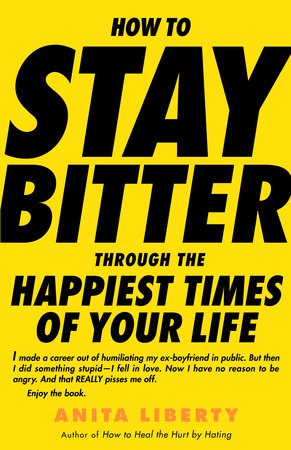
Last summer, I read the book “How to Stay Bitter Through the Happiest Times of Your Life” by Anita Liberty, which I would not have immediately categorized as a memoir upon first reading it. In her book, Liberty wittily “documents the perils and pitfalls” of her creative career and relationships through blog entries, written screenplays, poems, to-do lists, and finally essays. It was such a fun and inventive way for her to share her experience, that in my mind, prior to this class, I had never even dreamed of calling it a memoir because it was not the structured type of writing that I would expect of such a genre. Instead, my mind just allowed it to fall into a miscellaneous pile, labeling it a fun read and nothing else. However, now I know, this along with so many other unexpected forms of memory sharing are all memoirs, maybe just in a less conventional medium.
With the newfound understanding of memoirs, I have begun to see many things, beyond books, as memoirs. Most shockingly, throughout this pandemic, I have found myself spending more time on social media than I have ever before because this is one of the ways that I am able to stay connected with those who I am practicing social distancing. My nightly routine now consists of an hour – that should be spent sleeping – scrolling through Facebook, Twitter, Instagram, Snapchat, and Tik Tok to see what my friends have been up to that day. In each post, I see people sharing memories (photos and videos) from exactly one year earlier. They collect these images, and caption them with the story of that day, remembering a time before quarantine. Others will upload videos of them talking, where they quite literally say “story time,” as they begin to tell their audience something that has happened to them in the past. It has become a trend on Tik Tok to make videos that begin with “put a finger down if,” where the audio quickly tells an embarrassing story from the person’s past, and at the end the person in the video puts a finger down. On example of this is from user, @thec00chiepolice (I’m sorry about the username, but the content is appropriate). The list goes on for each platform, and what stood out to me most is the mention of Liberty’s use of blogs – the medium that I am writing for right now.
Image via Cecilia Gray
In today’s digital culture, we are constantly sharing experiences, stories, and most importantly memories online for our closes friends and are most estranged acquaintances to see. We snap photos, record videos, and write blogs for ourselves, first and foremost. We want to be able to remember the events that happen to us, but we also want to share them with the world, or at least those who are interested. On the other side, we become the ones who are interested, scrolling through social medias and reading other people’s thoughts because we live in a world that is consumed by memory. There is no right or wrong way to remember, and as we share these tidbits of our lives with the public, we are all in some way become memoirists, even if we are not the most prolific.
The concept of memory through the lens of someone else is very interesting. Sometimes you know someone – or at least you think you do – but it takes a deep investigation to fully understand that person and the memories you have of them. In both the documentary My Architect and Rocío G. Davis’s article “Documentary Constructions of Filial Memory in Nathaniel Kahn’s My Architect and Nicolás Entel’s My Father, Pablo Escobar,” I was introduced to the interesting subgenre of filiation.
The two men, Kahn and Entel both had limited relationships with their fathers due to the fact that their father’s work and personal lives left very little room for the development of the parental relationship that most people expect. After his father dies, Kahn goes on a journey of discovering who his father was and records the interviews and information that he gains in the documentary. For him, this is a way to gain a closer relationship with his father that he never had the chance to when his dad was alive. As Davis writes, this investigation is a mix of both biography and autobiography, as Kahn’s research began as a way of telling his father’s story, and along the way he is able to discover things about himself.
For Entel, on the other hand, had a relationship with his father, but strains caused a divide. Later on, Entel desires to get to know who his father was, not having that knowledge on hand, and he conducts a similar filiatory research.
I find both of these men’s stories interesting because I find that in a way, there is always a grey area that children have in understanding their parents and their pasts, although not always to that extreme. Doing such in depth research on the person who has a major influence on your being, regardless of how much time you may have spent directly with them, is a very powerful means of introspection.











 Inky Impressions